One program, three ways to run it. Each one starts with a conversation.

Your company trains the technical side. We coach the rest: the traits that decide whether a crew follows someone. The material is the same in all three. What changes is how deep it goes and how long we stay with your leaders.

One-day workshop

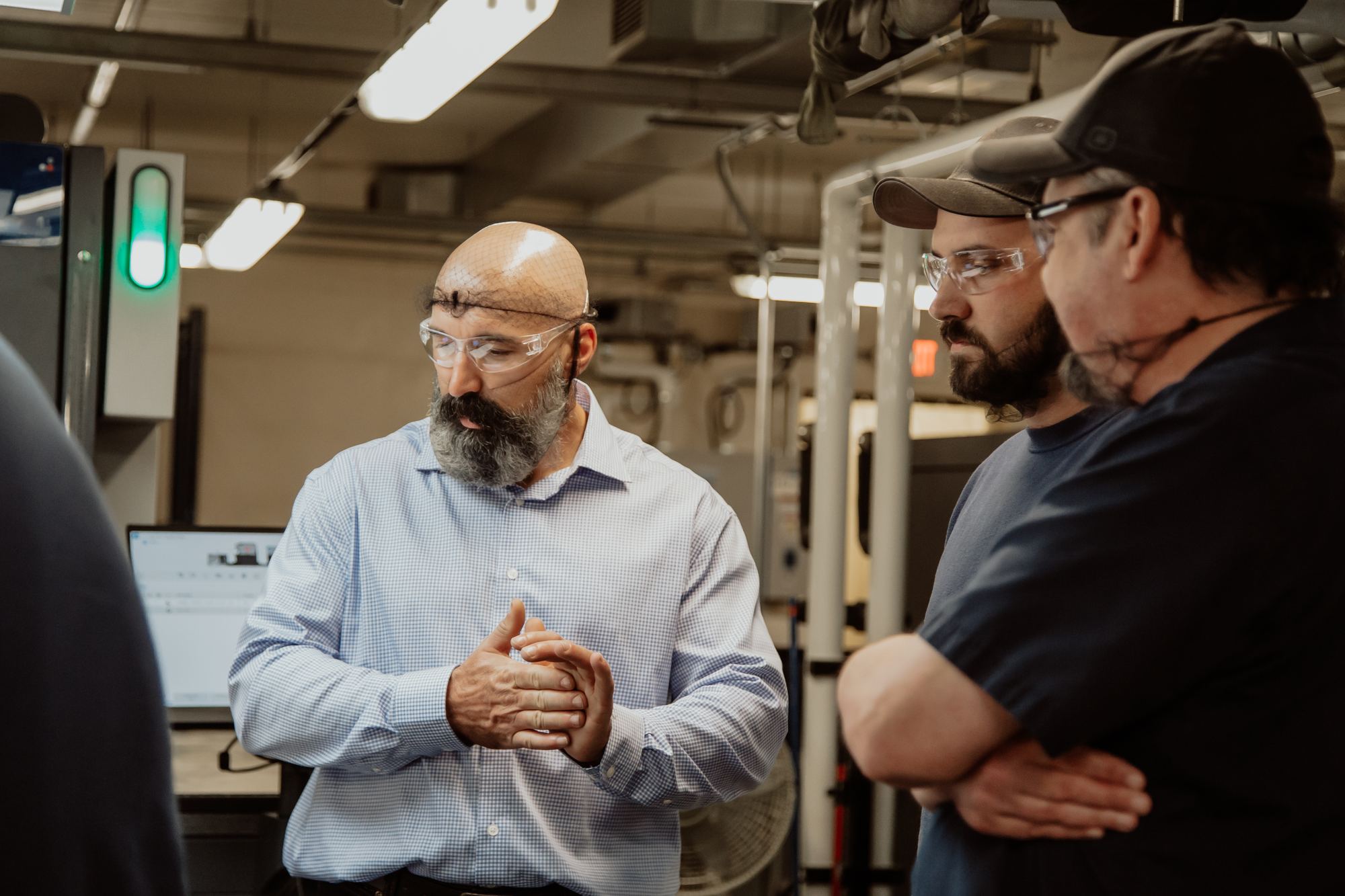
Jacob VandenPlas working a problem through with an operator at the press

For owners, HR and training leads who want to see the material first.

A full day with your leaders. The same material as the longer programs, packed into one session: the tools, the tactics and an action item for every leader in the room. It is the quickest way to find out whether the longer programs fit.

Who
Owners, HR, training and development
Length
One day
You leave with
Tools and an action item for each leader

3 to 6 month program

Jacob VandenPlas in a one-on-one conversation on the warehouse floor

For the company that needs the core but can't commit to a full year.

The core of the program in a shorter run: the Expectations Exchange, the mental bank account and the habits under them, with follow-up between sessions so each tool gets used on the floor before the next one.

Who
Supervisors, leads and managers
Length
Three to six months
At the end
A read on where each leader stands

12-month program

Jacob VandenPlas walking a warehouse aisle

For the owner who wants to know exactly where every manager stands.

The full program at full depth. Twelve weeks of core sessions, follow-up on every tool for the rest of the year, group meetings to start and each quarter, and at the end a written synopsis of where each manager stands, so you can decide whether to retrain, train further, promote, or cut them free.

Who
Every manager and supervisor
Length
Twelve months
At the end
A full written synopsis

How the program runs.

These twelve weeks are the core of every format. The workshop covers them in a day. The longer programs take them a week at a time and stay to make sure they stick.

  1. Week 1

    Meet every leader.

    We sit down with each of your leaders, explain what we are doing, and they fill out a questionnaire on the leadership they work under now.

  2. Week 2

    The first Expectations Exchange.

    A personal introduction and the first written exchange: we expect them to show up, take part and ask questions, and they hear what to expect from us.

  3. Weeks 3–11

    The core, one piece a week.

    A shift in how leaders see the job, the mental bank account, then one habit of effective leaders each week. Each one gets used with their own crew before the next.

  4. Week 12

    Where the time goes.

    A full-day look at what each manager actually spends the day on: what adds value and what does not.

  5. The year

    Follow-up and the synopsis.

    In the 12-month program: follow-up on every tool, group meetings each quarter, and a written synopsis of where every manager stands.

No surprises at review time.

Every manager in the program sits down with each of their people at least once a month for an Expectations Exchange: a short, written one-on-one about what each side expects. They get a copy to run with their own crew, so the habit goes down the line.

Add the mental bank account, two notes a week in each person's file, and by review time there is a year of it on paper. Nothing on the review comes as a surprise.

12
Expectations Exchanges a year, one a month
104
mental bank account notes a year, two a week
116
written records by review time, for every person

Three steps, no pitch.

  1. A conversation.

    You tell us what is happening on your floor. We listen more than we talk.

  2. A look at the floor.

    If it makes sense, we come see it: the shifts, the leads, where the fires start.

  3. A plan in plain language.

    Which format fits, who takes part, and how you will know it is working. You decide from there.